Your On-Premises Estate Is Your Most Critical Infrastructure. It's Also Your Least Automated.
The estate nobody wants to talk about
Every regulated organization has one. A physical infrastructure estate, racks of servers, cooling systems, power circuits, fiber runs, that can't move to the public cloud. Not because the team hasn't tried. Because the regulator said no, or the data classification said no, or the risk function said no.
So it stays. And it keeps running the workloads that matter most: core banking, patient records, government systems. The things that cannot go down.
Here's the problem. While those workloads stayed put, the tooling investment and the people went somewhere else.
Headcount is leaving. Institutional knowledge is leaving with it.
Data center operations talent has been moving toward cloud-native roles for years. The engineers who knew the physical estate intimately, who could tell you exactly what would happen if you moved a particular switch, are retiring or leaving for roles that don't involve raised floors.
What they're leaving behind is a complex, interdependent environment that doesn't document itself. And increasingly, the teams managing it are smaller, less experienced, and under more regulatory scrutiny than ever.
APRA's CPS 230 and CPS 234 don't care that you're short-staffed. RBNZ outsourcing rules don't bend because your senior engineer retired. The regulator still expects you to demonstrate control.
The tools built for this problem aren't built for this buyer
The DCIM incumbents, Nlyte, Sunbird, and others, are pivoting toward cloud and hyperscale. Their AI features exist, but they run through external cloud infrastructure. Feeding your asset inventory and power telemetry to a foreign cloud model isn't something your CISO will approve, and it probably isn't something your regulator would love either.
The newer AI-ops tools are SaaS-only by design. They're genuinely good products for organizations that don't have a sovereignty constraint. That's just not you.
So the regulated buyer sits in a gap: too constrained for cloud-first tooling, too under-resourced for manual operations, and facing regulators who expect the same standard of control as organizations with ten times the headcount.
What provable control actually looks like
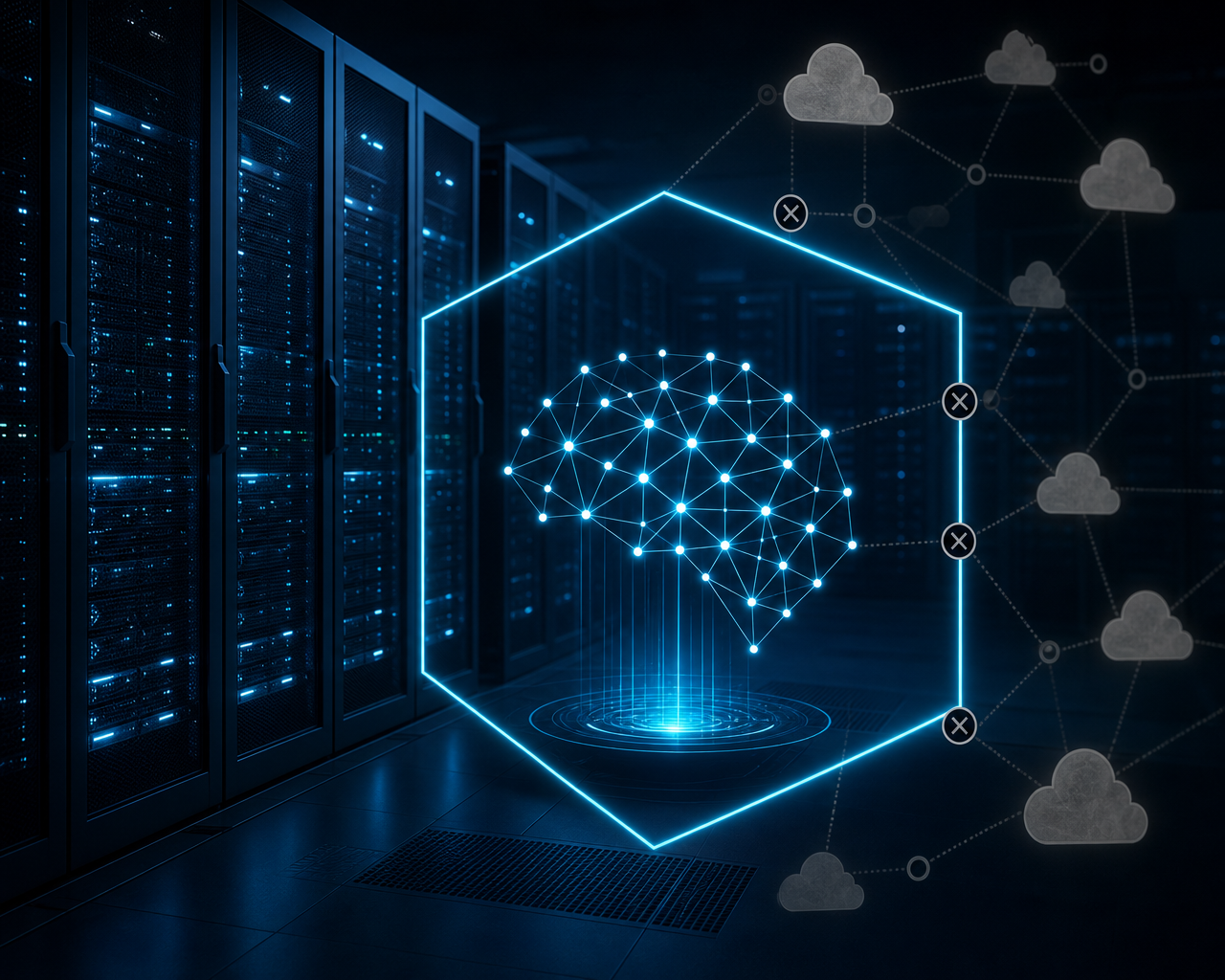
This is the problem CenterOS was built to solve. It's an AI operations platform built on a complete data model of assets, power, cooling, physical connections, and change history, with an AI layer that runs entirely inside your own control perimeter. No data leaves. No cloud dependency. Nothing your CISO or InfoSec function can't sign off on.
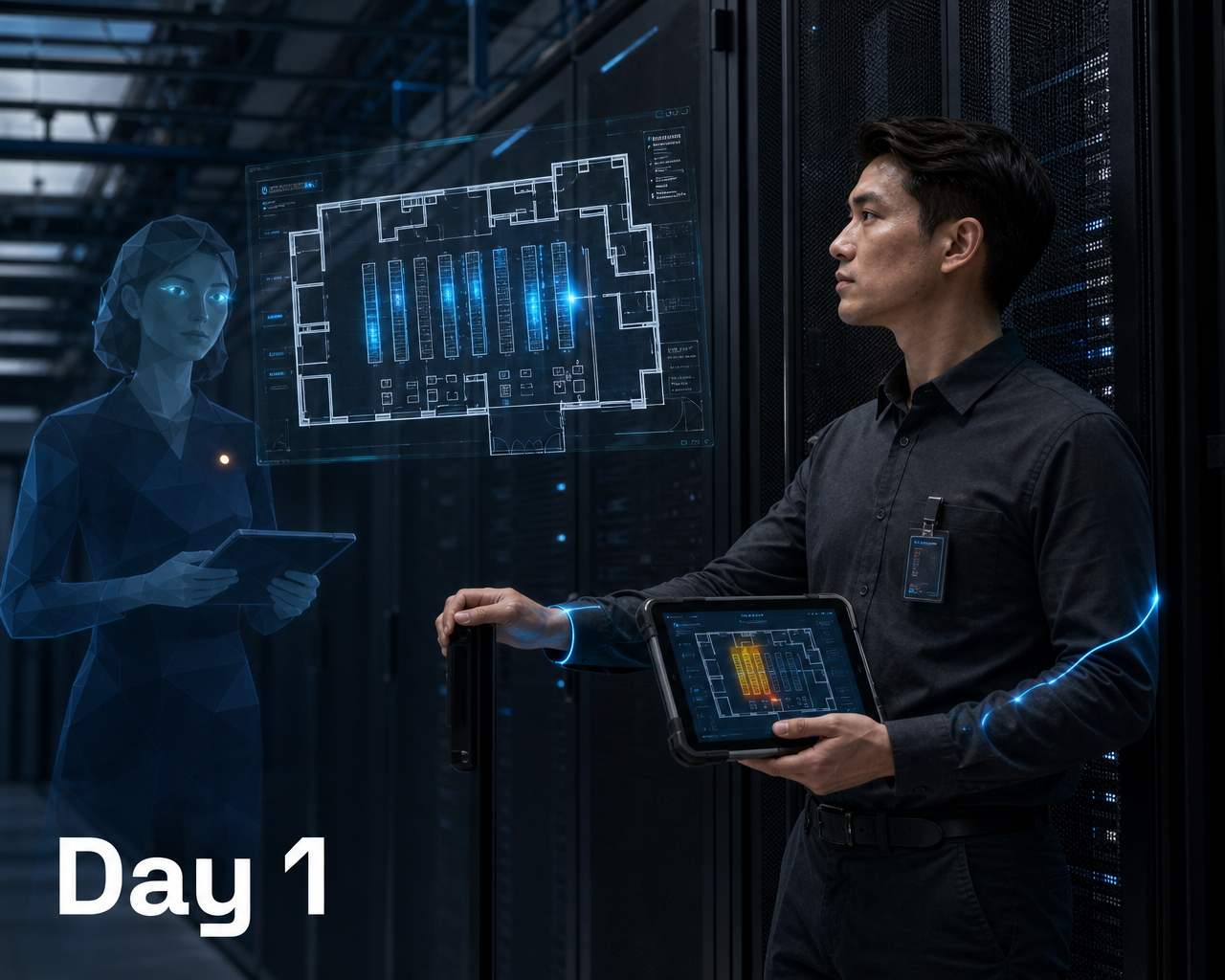
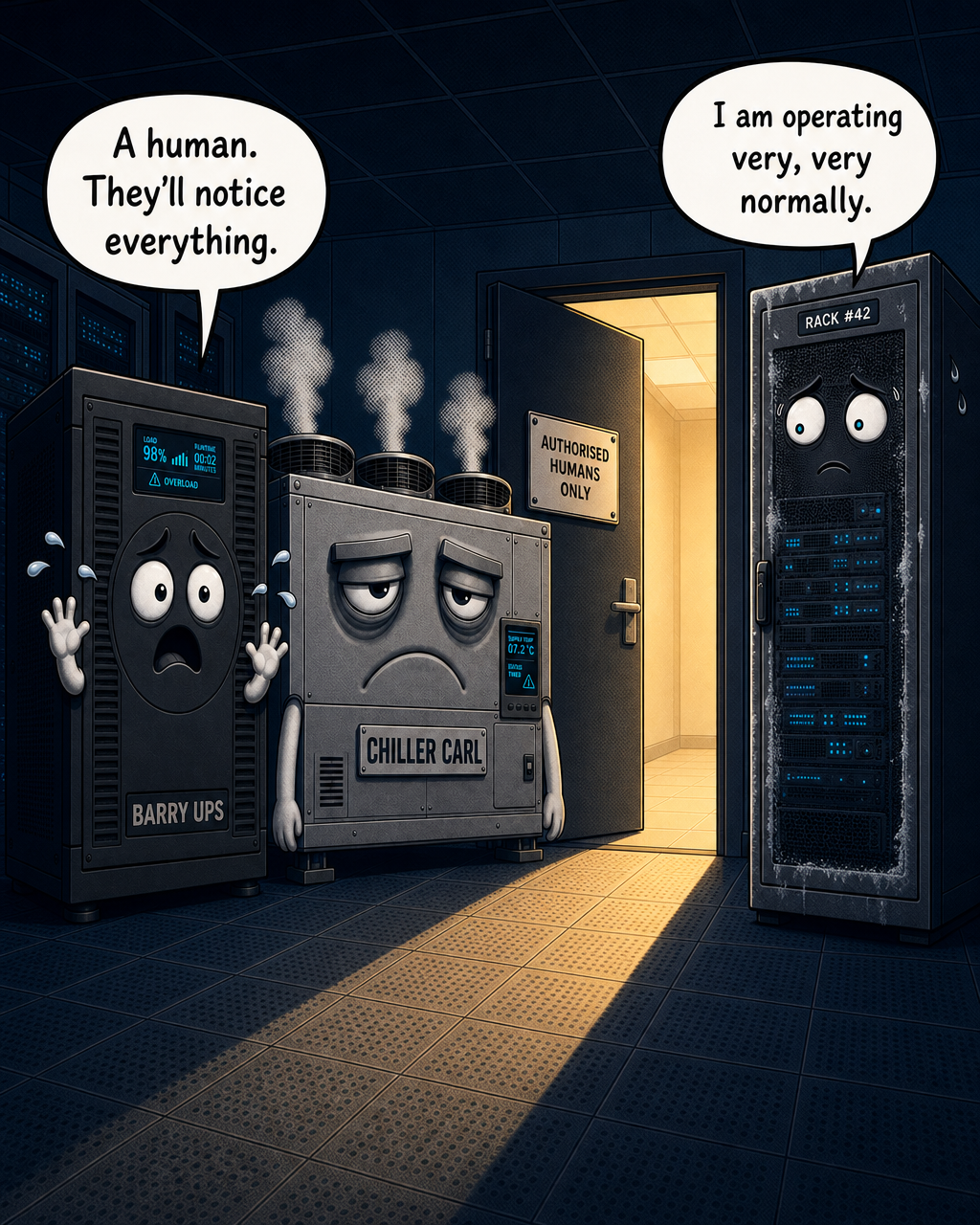
The AI has something real to work with because the data foundation underneath it is complete and mature. Capacity forecasting based on actual asset and power data, not guesswork. Anomaly detection that catches thermal and power issues before they become failures. Change tracking with impact analysis that shows exactly what's affected before anything gets touched.
And every action produces an audit trail. Not as an afterthought. As the default.
If your team is smaller than it was three years ago and your regulatory obligations are larger, that's the gap CenterOS closes. Your AI, running inside your boundary, over infrastructure that was always going to stay yours anyway.
The estate you keep deserves tools built specifically for the constraints you actually operate under.
CenterOS
The AI-native DCIM that runs anywhere — including inside your perimeter
The AI-native DCIM that runs anywhere — including inside your perimeter
Learn more about CenterOS and get started today.
Visit CenterOS