Data Center Infrastructure Management
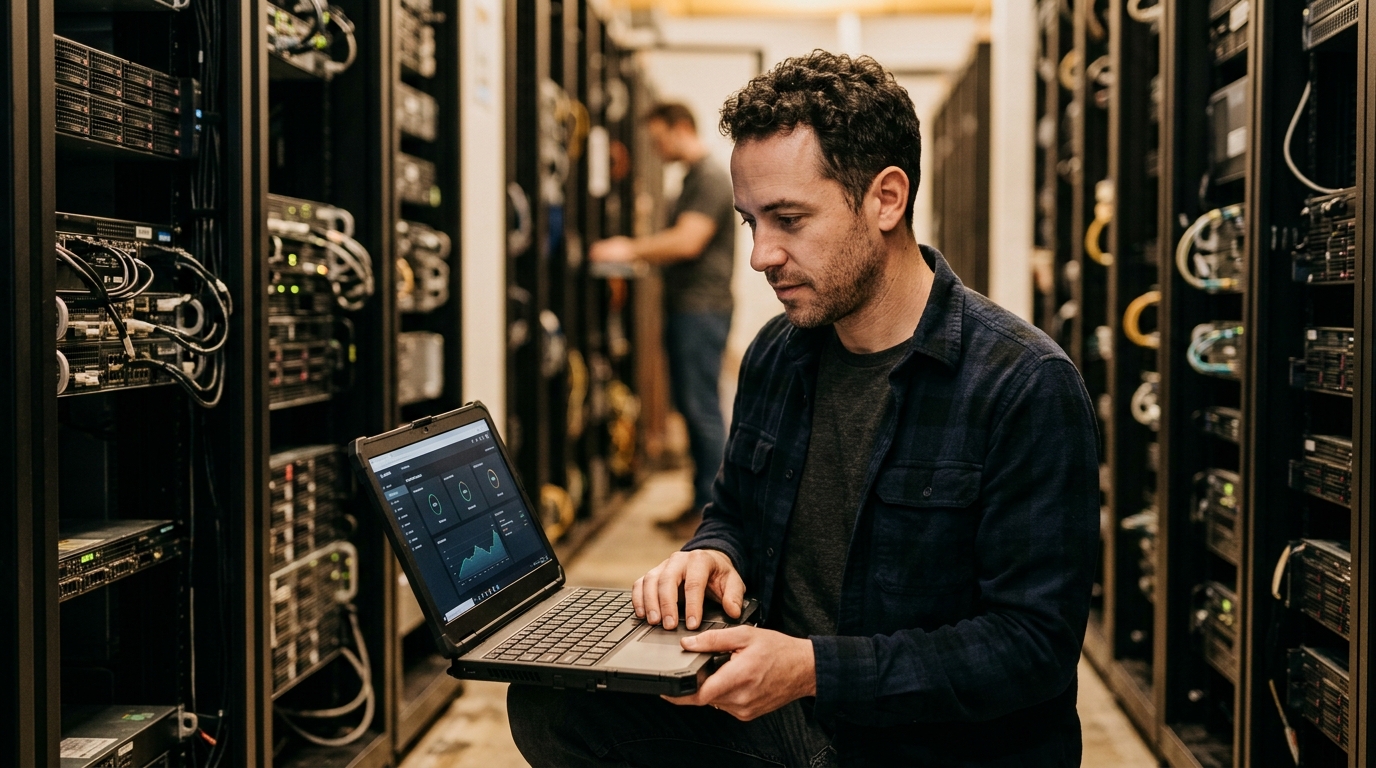
CenterOS is a complete data center infrastructure management (DCIM) platform built for organizations that need more than a dashboard. It brings together asset management, power and cooling monitoring, capacity planning, physical connections, change management, and AI-assisted operations in a single, integrated platform. Every function shares the same data, so nothing falls through the gaps between tools. For regulated organizations managing retained estates under APRA or RBNZ scrutiny, that completeness is not a convenience. It is what makes the evidence trail credible.
What is Data Center Infrastructure Management?
DCIM, or data center infrastructure management, is the discipline of bringing together all the data about your physical infrastructure into one place so you can manage it intelligently. That means assets, energy, space, cooling, physical connections, capacity, and change management, treated as a connected whole rather than separate problems.
The value of DCIM comes from integration. Understanding your energy usage only matters if it connects to your capacity planning. Tracking your assets only helps if change management keeps that data current. When these functions are siloed across spreadsheets, home-grown tools, and vendor-supplied software, every decision requires manual reconciliation and every evidence pack is assembled by hand.
CenterOS brings all of these functions into a single, coherent data model. Each area of functionality draws on the same underlying data, so changes made in one place are immediately reflected everywhere else. The result is an accurate, continuously maintained picture of your infrastructure, ready for the operational decisions you make daily and the regulatory reviews you cannot avoid.
Lose the Spreadsheet
A DCIM platform does the work that spreadsheets cannot sustain at scale. Take space and weight planning: CenterOS calculates available floor space and rack weight loads using manufacturer specifications you already have, without additional monitoring hardware. You can set limits, model placements, and plan expansions from data that is always current.
Power and cooling move beyond estimates. Real-time monitoring lets you track actual consumption against allocated capacity, identify inefficiencies, and forecast usage over time. For organizations that charge back infrastructure costs or need to justify capital spend to a CFO, that accuracy matters. For those preparing evidence for a regulatory review, it matters even more.
The Economics of DCIM
Running retained infrastructure well is fundamentally a capacity problem. Over-provisioned racks cost money. Under-utilized power capacity costs money. Unplanned expansions cost considerably more than planned ones.
CenterOS gives you the visibility to identify redundancy, reduce over-provisioning, and plan the most economical path when you do need to expand. Proper capacity management, built on accurate, current data, lets you make the case for deferring capital expenditure or right-sizing an estate. For a lean team managing a regulator-scrutinized environment, that foresight is the difference between reactive spending and a defensible plan.
DCIM and Operational Quality
Good DCIM means seeing problems before they become incidents. CenterOS monitors power and thermal telemetry continuously, flagging anomalies before they escalate. When something does go wrong, you are not searching through disconnected systems to find out how your power and network are routed or who owns the affected equipment.
CenterOS holds asset ownership, physical connections, and dependency data in one place. From an anomaly event, you can trace the origin, follow the dependency chain downstream, and produce a complete list of affected workloads and their owners in a single workflow. For regulated environments, that speed matters: it is the difference between a managed incident and a reportable one.
Presenting Your Infrastructure Clearly
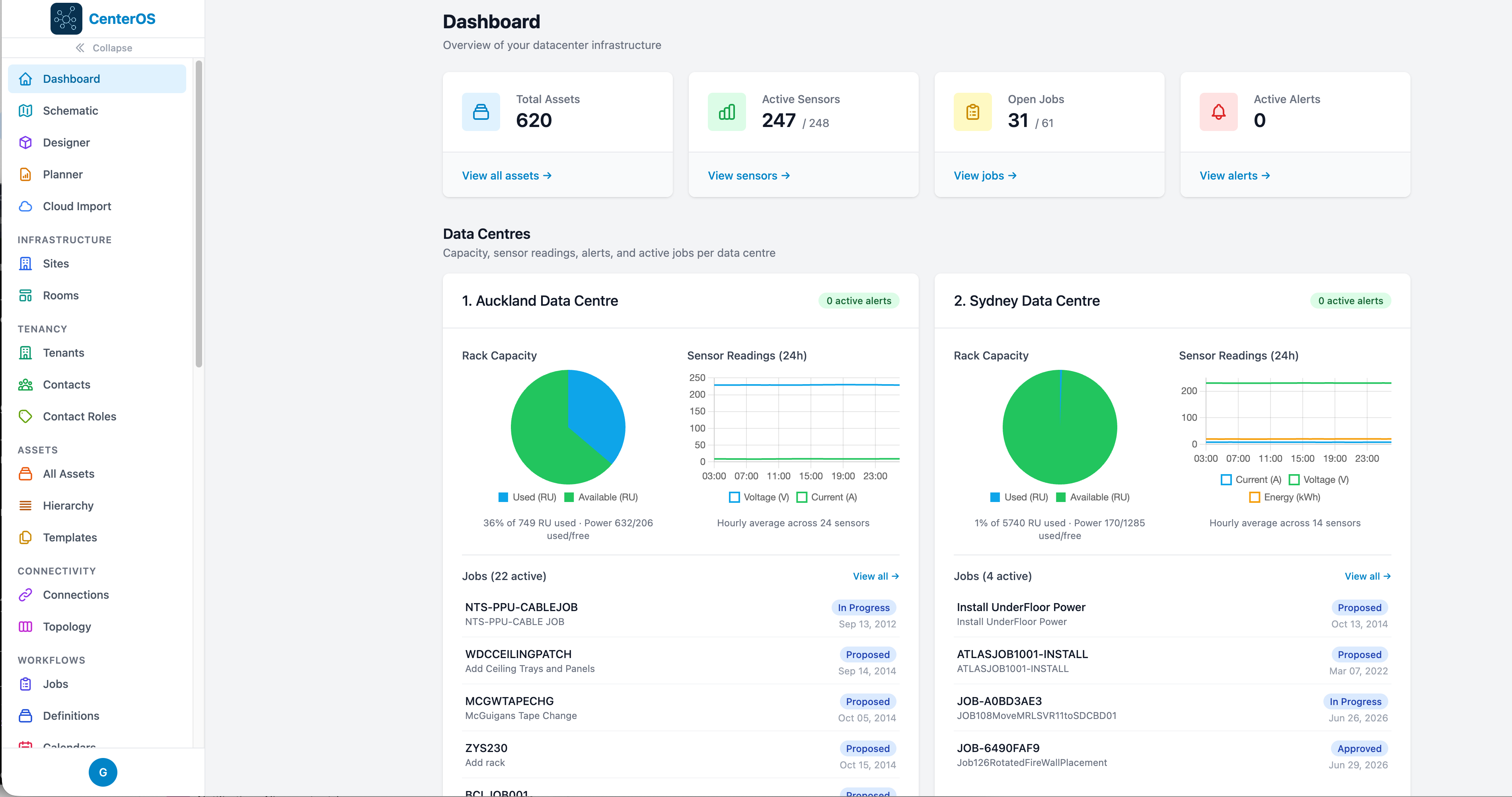
Complex infrastructure data needs to be readable by more than one person. CenterOS presents your environment visually, with floor plans, rack views, connection diagrams, and colorized overlays that highlight utilization, temperature, and alert status at a glance.
Drilling down from a floor plan to a specific device, its connections, its power draw, and its change history takes seconds, not minutes. That accessibility means infrastructure knowledge is not locked inside the heads of two or three senior engineers. It is visible to everyone who needs it, documented continuously, and defensible to an auditor who asks how you run your environment.